Posts

Neuenburger Fondue

Image
Neuenburger Fondue, originating in the Swiss region of Neuchâtel, is a beloved variation of the classic Swiss dish, made by melting Gruyère and Emmental cheeses with white wine. Traditionally enjoyed as a communal meal, it embodies warmth, togetherness, and a love for simple pleasures—qualities that have made it popular both in Switzerland and around the world. This rich culinary tradition reflects the soul of Swiss cuisine. I first experienced it at a festive holiday dinner hosted by my dear friend Henriette, and I now treasure the recipe as a heartfelt reminder of her and the beautiful heritage she shared with me. Ingredients:  3 cups (about 350g) Gruyere cheese, grated. 3 cups (about 350g) Vacherin Fribourgeois cheese, grated (or you can use 400g Gruyere and 200g Emmental cheese) 4 teaspoons potato starch or cornstarch 300ml dry white wine (such as Swiss Fendant or Chasselas) 1 small glass of cherry brandy (kirsch) 1 teaspoon freshly squeezed lemon juice. 1 teaspoon mustard 1 cl...

German Christmas Gingerbread

Image
Lebkuchen (Gingerbread), a beloved part of German Christmas tradition, carries with it centuries of history and warmth. Its origins trace back to medieval times when it was first crafted by skilled bakers in monasteries. Initially regarded as a luxurious delicacy, Lebkuchen evolved over time, becoming a staple during festive seasons. The recipe for Lebkuchen has been passed down through generations, each family adding its unique touch. Today, it remains an integral part of German holiday celebrations, with variations ranging from traditional honey-sweetened cakes to intricately decorated gingerbread cookies.   Ingredients: 8 egg whites 2 cups (400g) sugar 8 egg yolks 2 tablespoons ground cinnamon 1 teaspoon ground cloves 1/2 cup (70g) finely chopped candied lemon peel 1/2 cup (70g) chopped candied orange peel Zest of 1 lemon 4 cups (500g) almonds 3 cups (375g) all-purpose flour Method: 1.      In a large bowl, beat the egg whites until stiff peaks form. 2. ...

Dresdner Stollen

Image
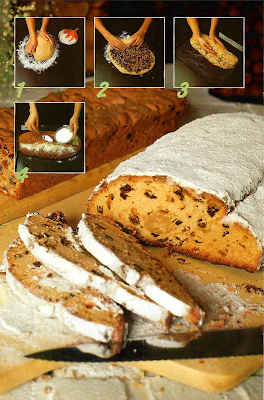
The tradition of baking Stollen in Dresden dates back to the 15th century. The ingredients used in Stollen, such as dried fruits, nuts, and spices, are often associated with the flavors of the holiday season. These ingredients were historically preserved and used during winter months when fresh produce was scarce. The Dresdner Stollen has become a symbol of the city's cultural identity, celebrated at Christmas markets, festivals, and events throughout the region. It's not just a pastry; it's a representation of Dresden's history.  Ingredients For the dough: 600 g raisins 200 g currants 2 small glasses of rum 80 g yeast ¼ l milk 150 g sugar 1 kg flour 1 tsp salt Grated zest of 2 lemons 1 tsp cardamom 500 g butter 100 g ground almonds 20 g bitter almonds 100 g finely diced candied lemon peel 100 g finely diced candied orange peel For brushing: 200 g melted butter For sprinkling: 250 g fine sugar 5 tbsp vanilla sugar For dusting: Powdered sugar Directions Preparation the N...

Halloween Snack - Hexenbesen

Image
A witch's broom (Hexenbesen) made from cheese and pretzel sticks is perfect as a snack for parties. Here's a simple recipe for making them: Ingredients Pretzel sticks Sliced cheese (e.g., Gouda or Cheddar) Chives  (for decoration) Instructions Prepare the cheese: Cut the sliced cheese into 2-3 cm wide strips and 6-8 cm long. Fringe the cheese: Make small cuts at one end of the cheese strip to create fringes. Be careful to leave the other end intact so the cheese holds together. Assemble the broom: Wrap the uncut end of the cheese strip around the end of a pretzel stick. Use a piece of chive to secure the cheese at the top end of the pretzel stick. Tie the chive around the cheese to make it look like the broom handle. Serve Arrange the finished witch's brooms on a plate and serve as a delicious Halloween snack.